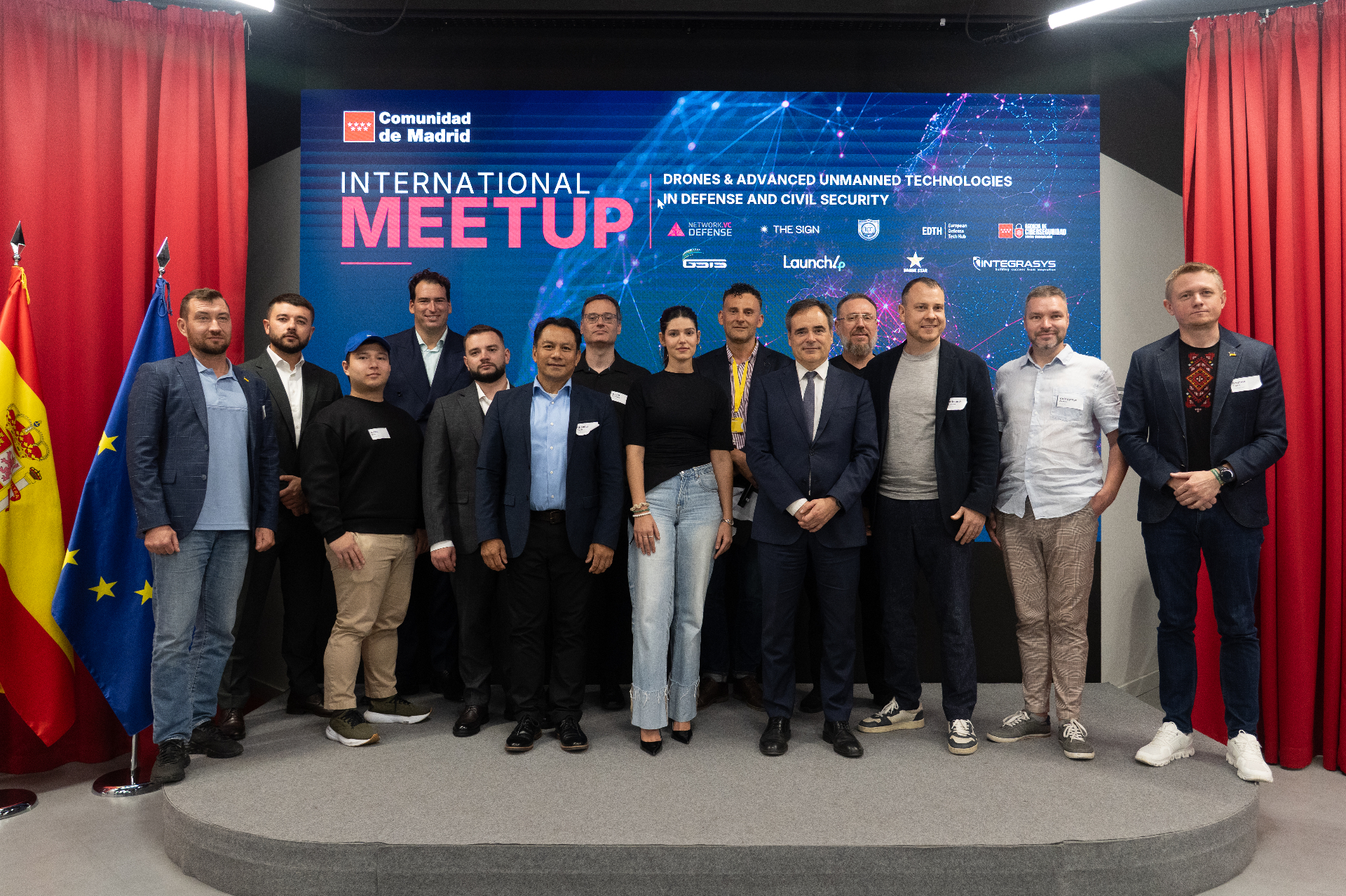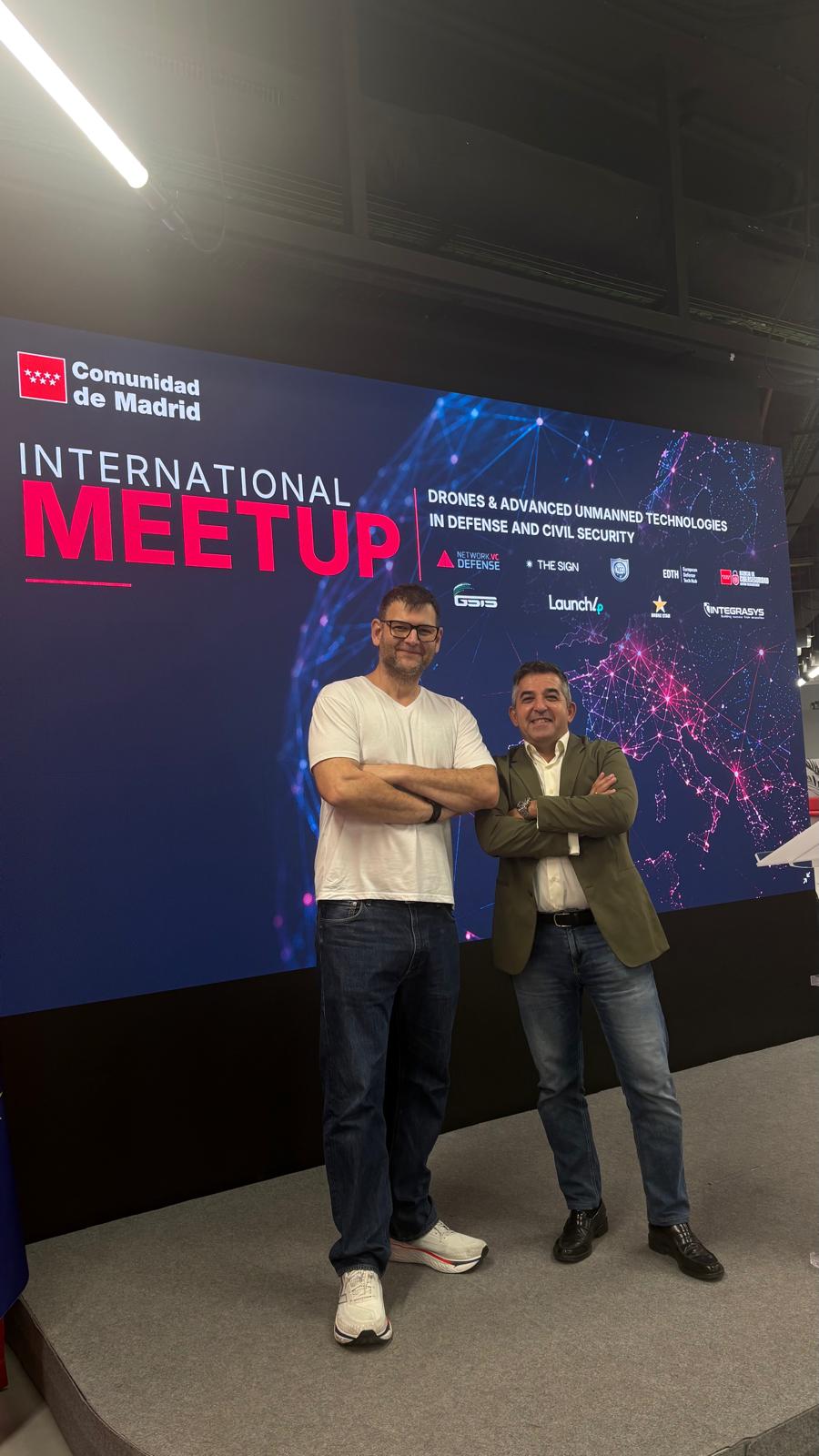
On 13 October I attended, together with Pepe from DroneStar, the International Meeting on Advanced Uncrewed Technologies for Defence and Civil Security, held at the Digitaliza Madrid centre. A day to learn about new developments and to reflect on how to integrate these capabilities into real protection needs.
The forum featured the participation of the Minister for Digitalisation of the Community of Madrid, Miguel López-Valverde, and brought together experts and investors around solutions that incorporate artificial intelligence, navigation and precision guidance. It was organised by the regional Cybersecurity Agency, THE SIGN.MEDIA, RCC Advisory and the European Defense Tech Hub.
During the meeting, Lucía López of Launch4 addressed in her talk the connection between hardware, software and service. The drone provides the ability to observe and inspect; the software makes it possible to interpret the information; and the service integrates that capability with the people, procedures and systems that determine how to act.
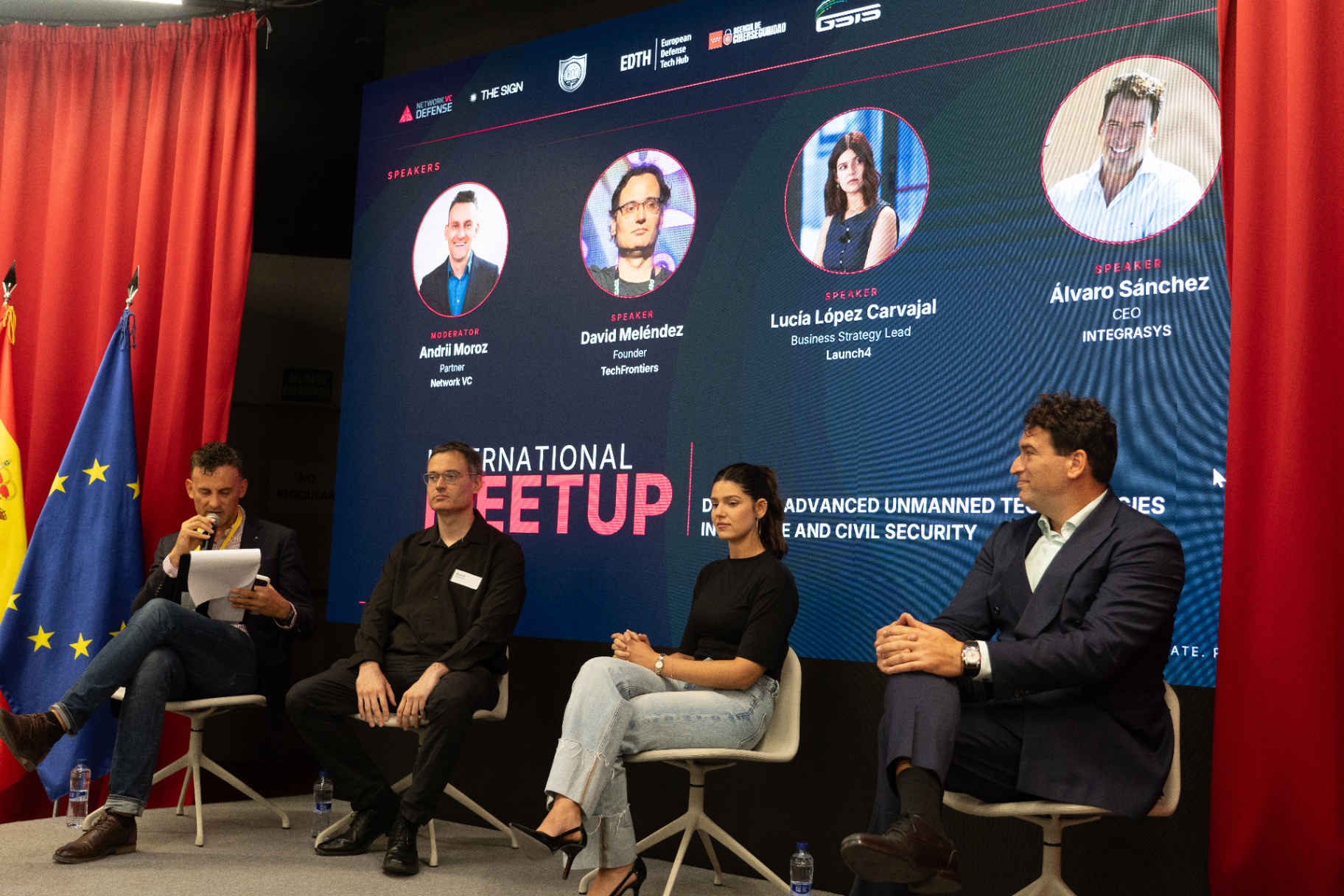
This approach has a concrete application in the joint work of Launch4, DroneStar and GSIS. DroneStar provides the hardware and GSIS turns it into a white label service, so that security companies can offer autonomous drone surveillance under their own brand. The model makes it easier to adopt these capabilities without having to build all the technological development from scratch.
Another central aspect of her reflection was the step from prototype to adoption. A solution must prove its usefulness in the conditions of those who will use it. That is why pilots make it possible to check how it fits with existing teams, procedures and systems before expanding the deployment.
The value of these technologies lies in their ability to respond to concrete needs. Their dual nature makes it possible to explore both civilian and defence applications. For those of us working in security, that potential poses a responsibility: assessing how to incorporate each tool and what conditions should accompany its deployment.
Cybersecurity occupies a central place in this reflection. Protecting communications, control systems and navigation is essential for devices to fulfil their mission reliably, a concern also raised by the Cybersecurity Agency of the Community of Madrid in relation to the meeting.
From my perspective, the assessment of a system must include its integration into operations, the preparation of those who use it and the ability to respond to an incident. Trust is built by addressing these questions from the start.
Attending this meeting alongside DroneStar has allowed us to share a space of knowledge about a transformation we follow closely at GSIS. The next step requires connecting technological development with the experience of those who know the needs on the ground. That is where innovation can become a concrete improvement for security.